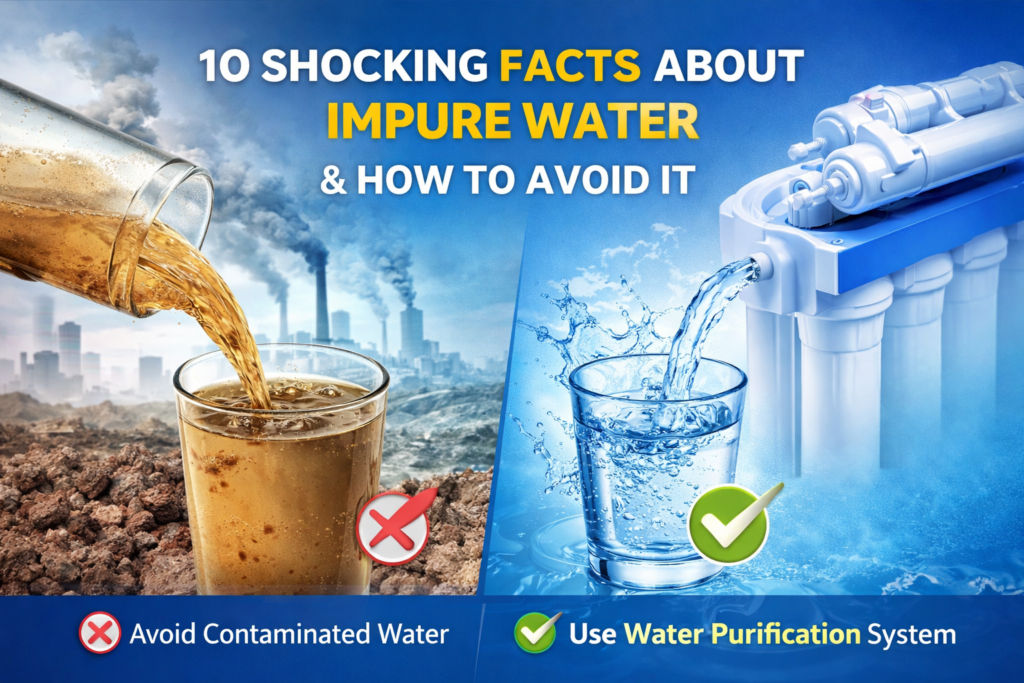
10 Shocking Facts About Impure Water & How to Avoid It
Table of Contents
Introduction
Water is essential for life, yet not all water is safe to drink. Impure water is a hidden danger that affects millions of people every day. Many assume that clear water is clean, but harmful substances can still exist without any visible signs. Understanding the risks associated with impure water and knowing how to prevent them is crucial for maintaining good health and ensuring safe daily consumption.
What is Impure Water?
Impure water refers to water that contains harmful elements such as bacteria, chemicals, heavy metals, or physical impurities. These substances reduce overall water quality and make it unsafe for human consumption. Drinking such water over time can lead to serious health problems, making it important to identify and treat contaminated sources properly.
10 Shocking Facts About Impure Water
1. It Can Look Completely Clean
One of the biggest misconceptions is that contaminated water always looks dirty. In reality, many harmful substances are invisible.
2. Causes Serious Diseases
Unsafe water can spread illnesses like cholera, diarrhea, and typhoid, especially in areas with poor sanitation.
3. Contains Invisible Pollutants
Most water contaminants such as bacteria and chemicals cannot be seen without proper testing.
4. Heavy Metals May Be Present
Polluted water may contain lead, arsenic, and mercury, which are harmful even in small amounts.
5. Children Are More Vulnerable
Young children are more affected due to weaker immune systems, making clean water essential for their health.
6. Boiling is Not Always Enough
Boiling helps kill bacteria but does not remove chemicals or heavy metals from impure water.
7. Storage Can Affect Quality
Even clean water can turn unsafe if stored in unclean or open containers.
8. Industrial Waste is a Major Cause
Factories and urban waste significantly contribute to poor water quality in many areas.
9. Long-Term Health Risks
Continuous consumption of impure water can lead to kidney issues, digestive problems, and weakened immunity.
10. Affects Taste and Smell
Bad odor or unusual taste often indicates poor-quality water and possible contamination.
How to Avoid Impure Water
Ensuring access to safe drinking water requires a combination of awareness and preventive steps:
- Use advanced water purification systems like RO or UV filters
- Store water in clean, covered containers
- Avoid drinking from unknown or untreated sources
- Regularly clean water tanks and storage units
- Test your water quality periodically
- Prefer trusted suppliers for clean drinking water
Following these steps helps reduce the risks associated with impure water and ensures better health for you and your family.
Effects of Unsafe Water on Daily Life
The impact of contaminated water goes beyond major diseases. It can quietly affect your daily routine and overall well-being. People consuming unsafe water often face frequent stomach discomfort, low energy levels, and skin-related issues. Even hair problems like dryness and hair fall can be linked to poor water quality.
conclusion
Understanding the dangers of impure water is essential for a healthier life. Many risks are not visible, which makes awareness even more important. By adopting simple habits and using proper purification methods, you can protect yourself from harmful contaminants.
Always prioritize safety and choose reliable sources to ensure clean and healthy drinking water every day.